I’m an idiot, I think to myself. I haven’t caught a fish in two weeks, and when I finally spot the first fish after having walked for five kilometers, I immediately spook it due to my reckless fast-paced walking. Fish are few and far between in this highcountry river but I’m completely alone by the river in this isolated valley, and I still have many kilometers of good fishing water ahead of me. I spot the next fish a couple of kilometers further upstream where a tributary flows into the main river and forms a long pool. The fish is in shallow water close to the bank, and I have to admit that my casting skills in combination with a strong Nor’wester headwind don’t favor my chances of being able to present the nymph in any manner acceptable to the trout. It doesn’t take more than a couple of casts before the fish feels my presence and jolts out into the deepest part of the pool. Even standing by this beautiful river, surrounded by grassy flats and stunning mountains covered in beech bush, I still find myself shouting words that shouldn’t be put down in writing. Fishing for trout in the crystal clear rivers of New Zealand’s South Island can be merciless!
A year later I’m back in New Zealand. Yes, I did catch fish on my first trip the year before, but it was hard work with few fish as a result. However, there’s something special about fishing in New Zealand. The rivers are the closest you can find to true wilderness—untouched by human activity—apart from the fact that the trout population in New Zealand is man-made, but that’s another story. Fishing is almost exclusively done to sighted fish, with individual fish often being far between. But the fish are big—really big—and it’s definitely fishing of highest sporting quality. Already on my way home aboard the airplane from my first trip I knew I would come back.
I’ve had time this past year to reflect on my fishing and thought a lot about what I could do better. One thing that’s for sure is that my walking pace needs to come down when I’m navigating the river. I need to respect the fish’s feeding window—how far it’s willing to deviate from its lie to take nymphs and dry flies—and finally I have to admit that it simply doesn’t help to show up in light blue and bright pink shirts.
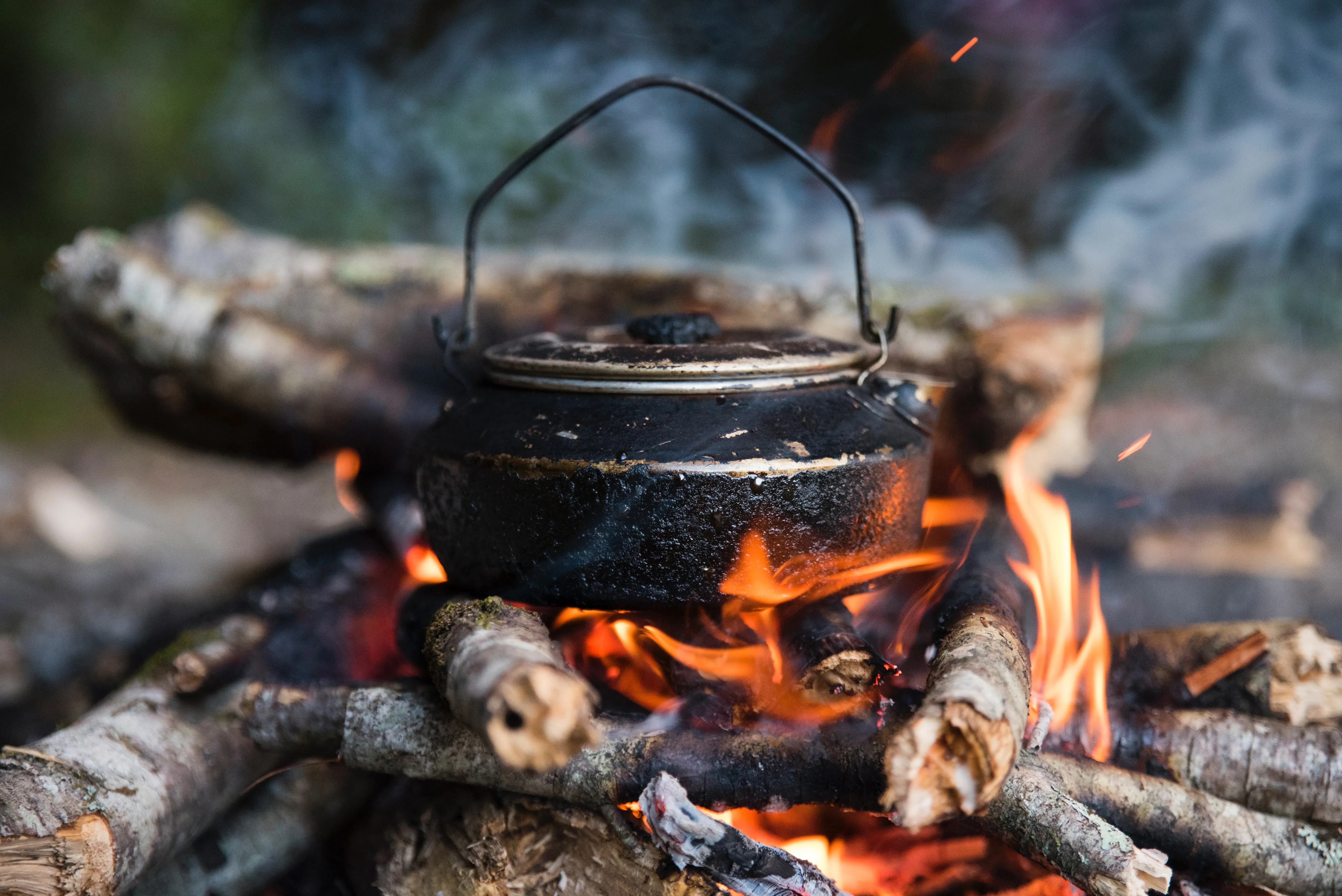
Here I am again, back on the same river I visited on my first trip the year prior. This time I’m dressed in camouflage clothing as I slowly walk up the river bank. The water is still slightly colored after a flood a couple of days before. These are perfect conditions. The high water will have dislodged a lot of natural food items such as mayfly and caddis nymphs.
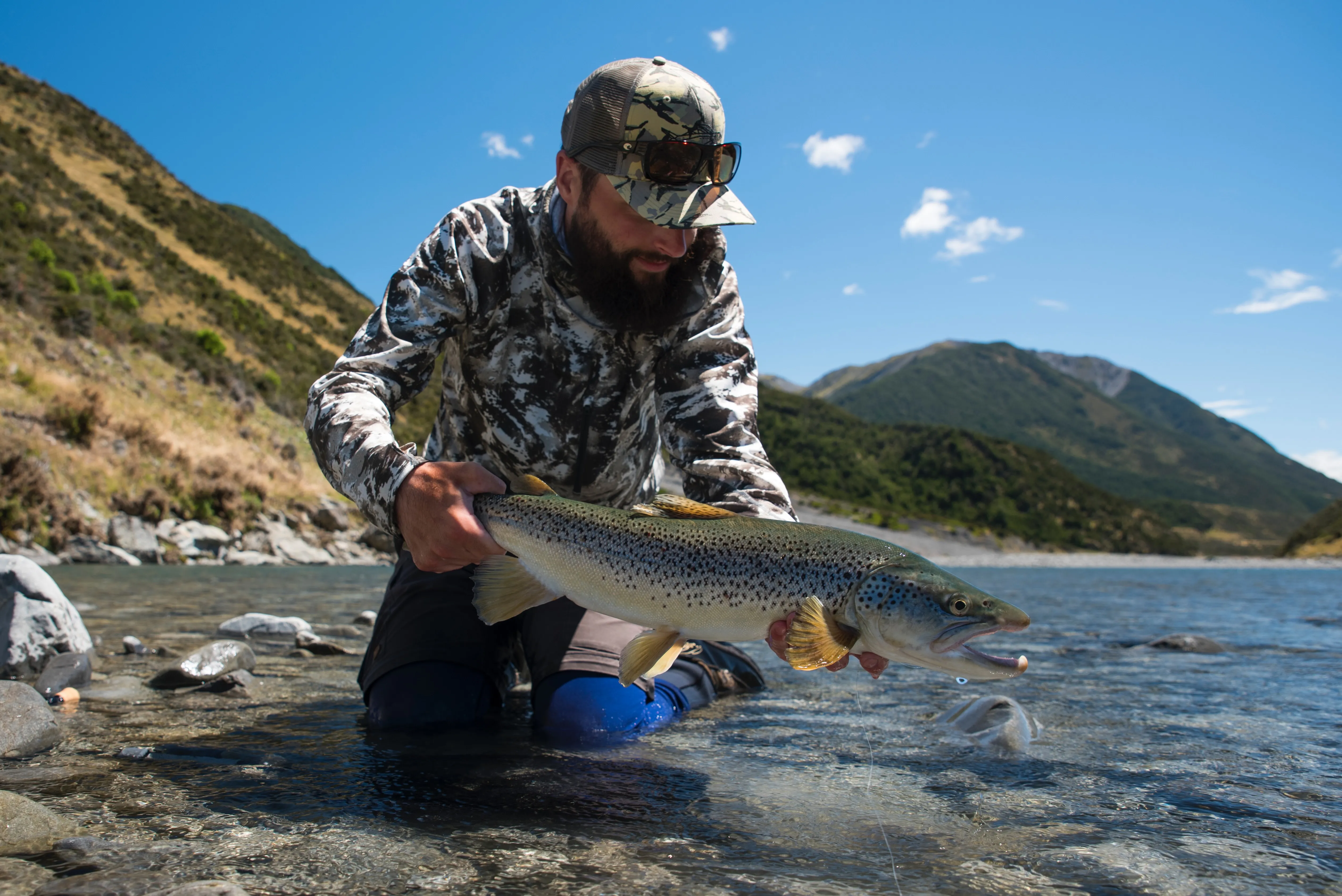
I’m moving slowly and as I reach the first good pool I spot a dark shadow a good distance upstream. I stop and wait for it to move. A couple of minutes later the shadow swings half a meter to the right. It looks like a good fish! The fish is on the near side of the pool at about half a meter’s depth, and to make it easier for myself to see the take I tie on an Elk Hair Caddis dry fly at the end of the tippet. In the hook bend of the dry fly I tie another half meter of tippet with a small size 16 bead-headed Pheasant Tail nymph. I sneak into casting distance of the fish and try to make as precise and gentle a cast as possible. My dry-dropper rig lands about a meter and a half upstream of the fish. It’s with great excitement as the flies are drifting into the fish’s feeding zone. The fish starts moving and a couple of seconds later my Elk Hair Caddis is slowly being submerged beneath the surface. The fish has taken the nymph and I immediately set the hook! It’s on! All hell breaks loose and the strong fish takes a run for the far bank. I put as much pressure on the fish as I dare, because even though I’m using 4x (0.18 mm diameter) tippet and a soft fiberglass rod, I’m still careful not to stress my tackle too much or risk a hook pull. Then one of the least favorable things to happen when fighting a fish in a pool happens which is that it rushes downstream over the tailout and into the rapids below. Fortunately, there’s calmer and shallow water along the bank and I manage to maneuver the fish into the safer waters. The fish definitely didn’t like the sight of me approaching it with my landing net, and it rushes out into the rapids again. This time I apply even more pressure to the fish and almost beach it until it lies on its side in the shallow water. I manage to get the fish’s head in the net, so I drop my rod and hurry to grab the fish by the tail and wrestle it into the net. The fish is landed and what a triumph it feels like! The weight scale creeps up to 6 pounds and I feel incredibly happy!
It’s now evening and I’ve pitched my tent on the grassy flat close by the river. Dinner consists of freeze-dried Beef Stroganoff. After the meal I enjoy the day’s last smoke in my pipe to decompress and reflect on the day’s fishing and taking in all the impressions from the scenery, nature, and life surrounding me. Day turns to night. As a native to the Northern Hemisphere I marvel at all the strange stars lighting up the night-time sky.
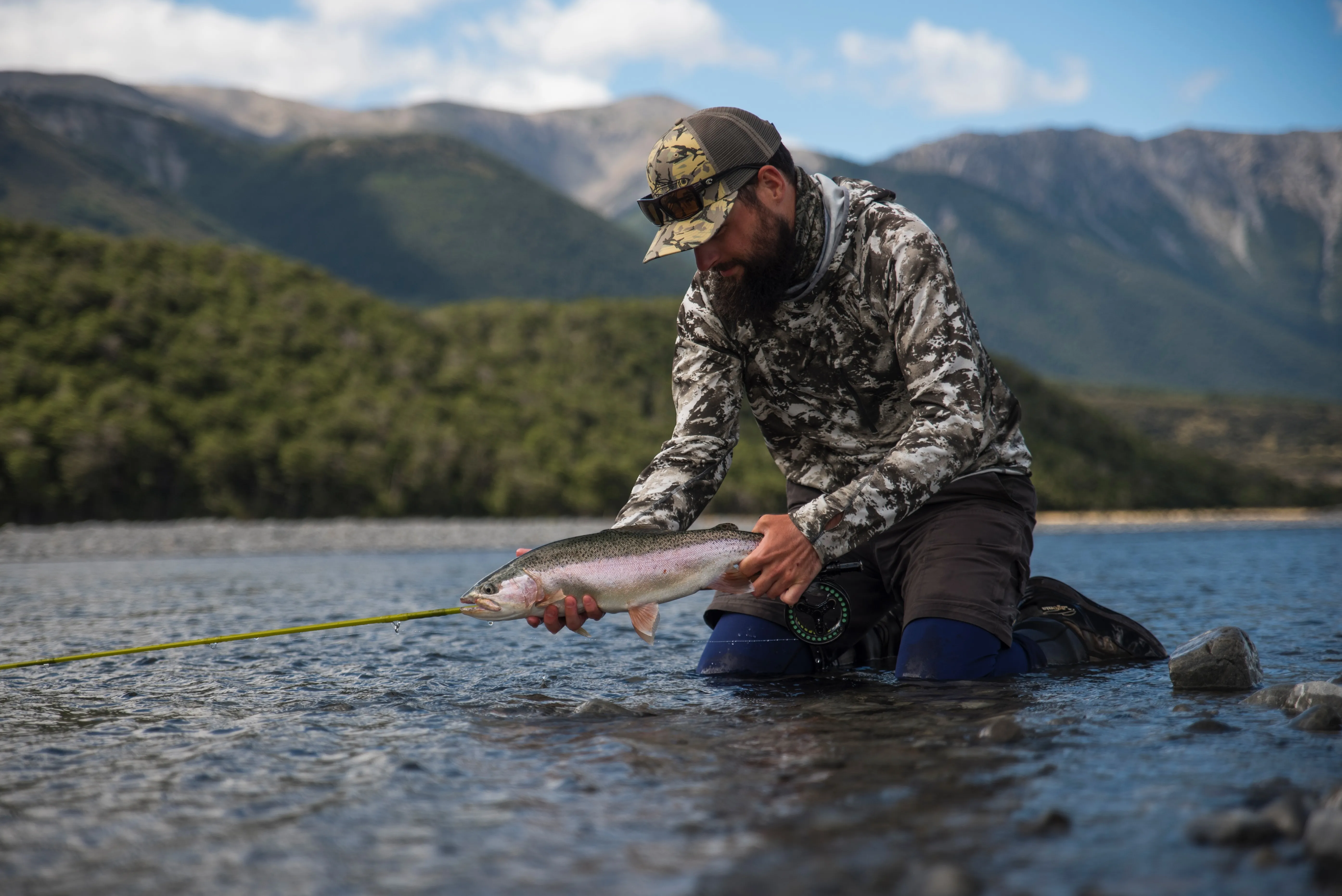
The next day I continue upstream and the morning’s fishing results in a fine rainbow trout. From the year before I can remember a good pool about fifteen kilometers upstream from the road end and by mid-afternoon I reach this pool. It has become overcast and difficult to spot fish, but at the top of this pool I still think I can see a smudge—something that doesn’t quite look like a stone—behind a rock. The shadow doesn’t move during the five minutes I’m staring at it so I’m not completely convinced that it’s a fish. I decide to try my luck and get ready to cast. I release my dry dropper rig from the rod eye. I need to cast diagonally upstream, and the first cast is about a meter too short. The next cast lands perfectly and suddenly a big snout comes up and grabs my dry fly. It was a fish indeed! Taught by bitter experience, I wait a moment to set the hook until the snout disappears below the surface again… It’s on! The fish’s strength surprises me again and I have to run to keep up with the fish that’s well on its way downstream. Luck is on my side and after another hectic fight I’m able to net another beautiful brown trout. The fish is almost the same size as the previous brown trout and looks young and beautiful.
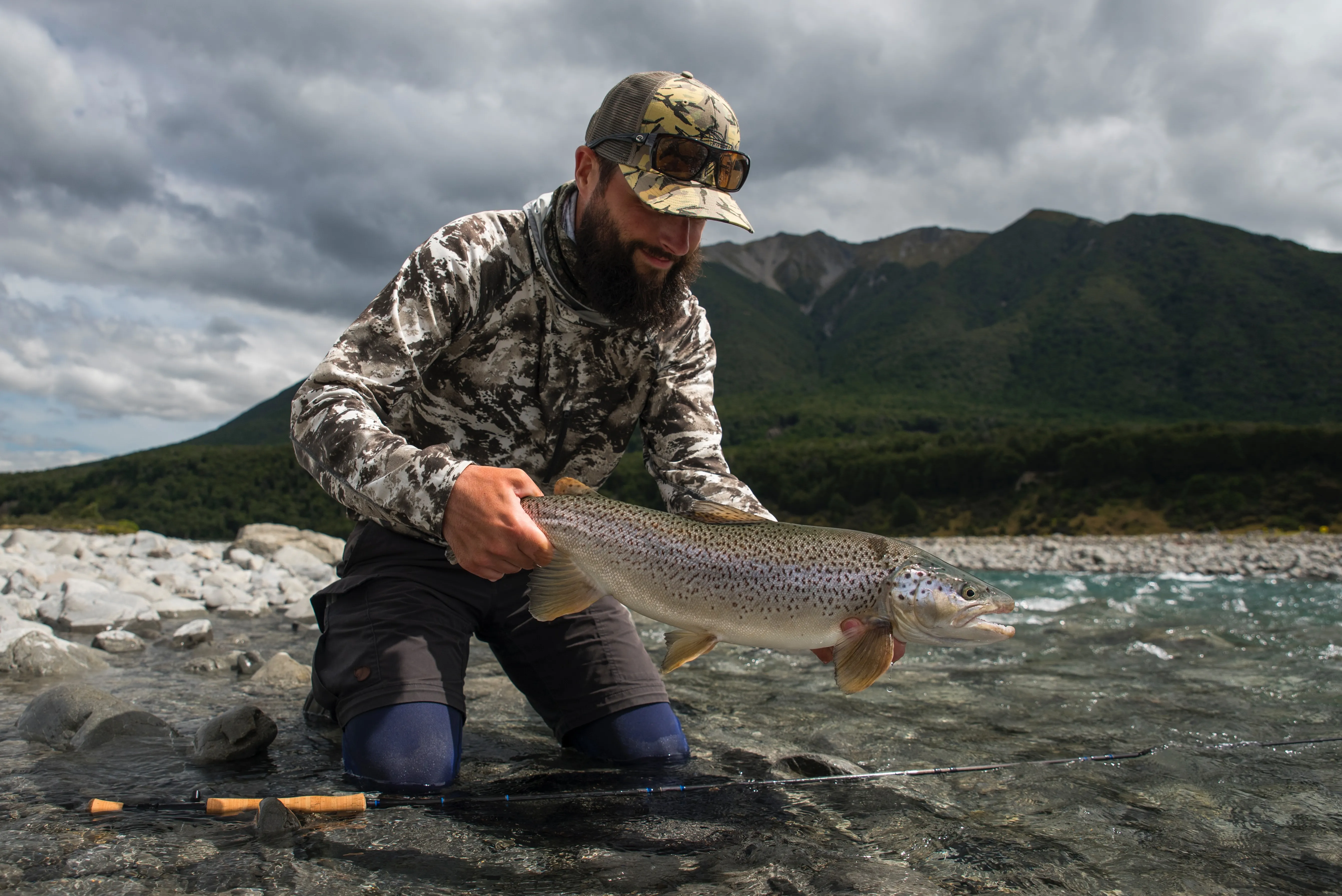
The moment after I release the fish feels like a turning point for me. It’s as if I now understand what fishing in New Zealand is all about, and the experience of success is absolutely fantastic. In stark contrast to all the challenges I had on my first trip, the pieces are finally starting to fall into place. There’s no doubt that doing it yourself is doing it the hard way. You either have time and a budget, or you are short on time with fewer concerns about your budget, in which case hiring a guide will drastically ease the learning curve. I say this well knowingly that I haven’t suddenly become an expert—far from it—but now I can finally enjoy the true sight fishing experience to its fullest extent. New Zealand is fantastic! It’s a paradise for fly fishers, a trout mecca!
Text and photos by Chiel Robben, March 2018.